I would assume it’d be a <4 cylinder, since less parts mean less breakage. The reason I ask is that I’m looking to build a kit car and I don’t want to over complicate it with an unreliable engine that is hard to work on. Thanks Scotty I love your channel ✌️

What kind of kit car?
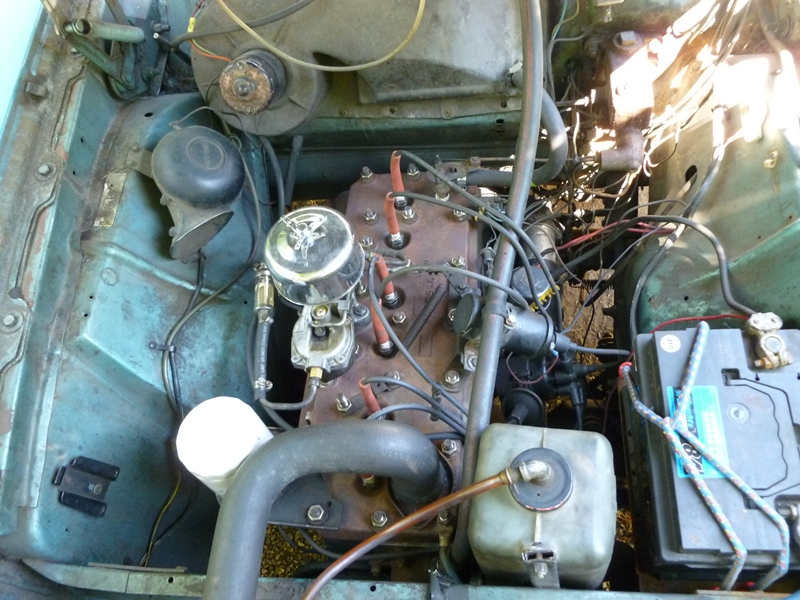

Could you explain your photo? Thank you.
Could you explain your photo? Thank you.
I thought it was pretty much self-explanatory. It's a 195.6 cubic-inch flathead, inline six-cylinder engine in a 1961 Rambler American. Very reliable and extremely easy to work on. For example, compare spark plug access to that in a transverse V6 engine. Here's one that's a bit more dressed up:

The good ole' days, when you actually had room to work on things.
Chrome plated thermostat housing? Pretty trick! @chucktobias
@doc - Definitely! You certainly don't see too many people dressing up those ancient mills that way. (It's a pre-war design used by Nash/AMC from 1941-1965.) I've owned a couple of cars with that engine over the years and it really is reliable and easy to work on.
I’ve never built anything like you are attempting. But the engine I am eyeing for swaps is a Honda K Series engine. It’s 4 cylinders, and everything seems to make sense on it.
Also, Almost everyone talks about LS engines from GM, but I have no first hand experience on that. It seems like everyone is doing LS Swaps, so I gather they are easy to work on.

I saw a video today of a LS Miata
That LS must scream in a Miata.
I know people put old air cooled VW engines into dune buggies

How about a 4 cylinder motorcycle engine? Available in liquid cooled or air cooled. Minimal mounting, shaft or chain drive, fuel injected or carburated. Do a search of Smart car with a Suzuki Hayabusa engine in it. It's a riot.
