I have a 2021 Kia Sorento I bought back in December 2020. The coolant reservoir when cold has a level about a 1/2 and inch below the MIN line. I have not checked it in a while but pictures I took of the engine compartment when the car was new indicate it was between MIN and MAX 10 months ago. Could this be as a result of the water portion of the coolant's normal evaporation? If I wanted to top it off should I add just water or water and antifreeze? It seems that if I add the 50/50 mix I would be increasing the concentration of antifreeze since this does not evaporate. Does the level going down 1/2" mean that much? What would you expect normally over a years time?
For all those who hate Kia's just give me a brake and spare me the poisonous barbs. This is just a general question that could apply to any car including Toyota or Honda. This question should not serve as an endorsement of any car brand.
And whatever you do don't tell my wife. {black}:smile:

https://rxmechanic.com/how-much-coolant-loss-is-normal/
I found this article which addresses normal coolant loss. It states due to normal evaporation of the water you can see as much as inch of change in the reservoir in a years time. I would guess this varies with the shape of the reservoir. That tells me the level has to be checked periodical and topped off as needed. This prevents air getting sucked into the radiator when the car cools off.
This question and subsequent answers should not serve as an endorsement of any car brand. And whatever you do don't tell my wife. {black}:smile:
Mein Auto ist wie eine Rakete
Hi Scotti
Thanks for the video reply. 9:12
https://www.youtube.com/watch?v=jYEfAY3uQx4
FYI The car had some initial problems due to the incompetent dealer leaving shrink wrap on the cabin filter but has been running fine ever since. It's now a year old. {black}:laughingoutloud:
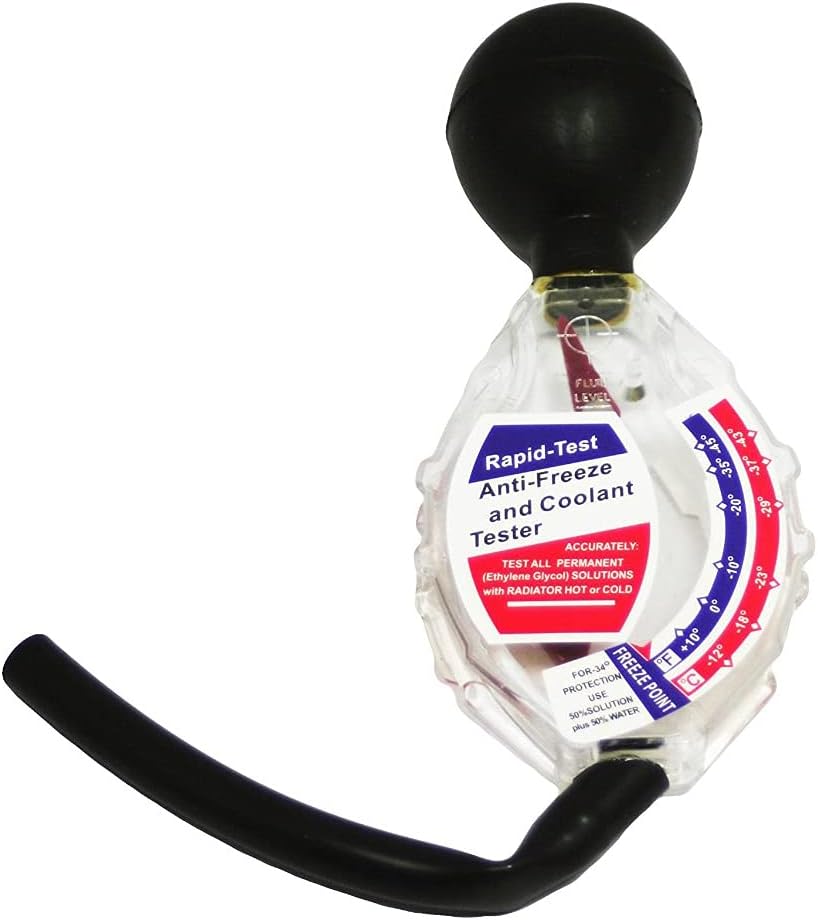

Thanks. That makes sense. If you are worried check the concentration. I have one of those.
I was more interested in what constitutes a problem. How much coolant loss over time is normal.
I don't think there's a such thing as 'normal'. It varies too much.
I wouldn't worry about 1/2" in 10 months.
Since you asked for a brake, here you go -

Here’s the spare -


{pear}:laugh:
that's what ran through my mind as well
I guess the proper word would be break. You guys must have nightmares about waking up and finding a Kia in your driveway.
Yes, because there's a good chance a Kia in the driveway would look like this:

It makes it easy to find in shopping mall parking lots. You just look for the smoke.
I never waste an opportunity to reply with a meme. I have nothing personal against you, it’s your $$$ and you’re free to spend it on what makes you happy.
Yeah, it seems to be just evaporation - although I have never seen it on my cars.
Might be a good idea to check the cooling system, I doubt it's anything very major like a head gasket or a serious design flaw but I'd check if your engine oil level has elevated.
If it's a relatively new design - it may have weird flaws, reminding me of older Ford 1.0L 3 cylinder EcoBoosts where anti-freeze would disappear from the expansion tank and magically make its way to the oil pan.
Anyway, This might be something that you'd want to show your dealer - to see what's leaking or where is it goin', usually they'd pressure test the cooling system to see if there are any leaks.
Also when it comes to other brands, Pretty much all VW group cars I've ever saw have terrible cooling system issues - and Honda Earth-dreams and Toyota Dynamic force both with horrid CVTs aren't that much better then an a Hyundai MPI engine paired to an 8 speed solid automatic (just change your fluids constantly, especially on that auto as friction material getting into the ATF and causing quite a bit of damage to the rest of the system does seem to be their main issue). (if it's a T-GDI or GDI engine with a dual clutch (I've been driving a GDI DCT Kia for quite a while and it was not reliable at all), then I'd just trade it in asap and get something else, just not high compression, conventional automatic, and Japanese quality)

The 2.4L non turbo uses the same block Kia has been using for years. They upgraded the heads for GDI but the basic engine is the same. Just don't slap a turbo on it. Those are the ones blowing up. The non turbo has more than enough power. I dragged a 23ft SeaRay up to Lake George and back and it did fine with 4 passengers and a ton of luggage. The turbo is just so they can say they have one. You slap a turbo on a theta engine and it will hammer it self to death. The dealer tried to sell a turbo and they were genuinely surprised at my balking. I also insisted on the six speed training I had on the SantaFe I was trading in. Dual clutch eight speed is too new. I wanted something proven and reliable.
Disclaimer: Toyota's are the best cars on the planet. I just can't afford one and I get sick of cars after 10 years.
Yeah it's good that you avoided the dual clutch, all dual clutches are bad (either drive like ****, cost a fortune to maintain, have bad reliability or for most models all at once (like the Ford Powershift))
Hyundai conventional automatic transmissions are very solid, just change the fluid frequently (and the filter if it's easily accessible) and it should be great.
-
The 2.4 engine wasn't offered on car you uploaded a picture of, that's only the previous generation. I'm familiar with the old Hyundai-Kia 2.4L Theta, I remember that engine being a bit trashy on mid-2000s Hyundai Sonatas (Everything from oil starvation to broken timing chains), but it wasn't terrible. The GDI version of the 2.4L Theta II is also not a new design, The Kia Optima had it for probably over a decade at this point, and it's just an engine that took all of the issues from the old Theta - and added new ones like the E-CVVT system, leaks and pretty bad oil consumption.
-
The new SmartStream 2.5 is also based on the theta but Hyundai-Kia say it'll be good for 150k miles and I kinda doubt it - only if you avoid their recommendations are service it very frequently.
-
The most recent Kia GDI engine I've driven was a Kappa Atkinson Cycle and the amount of valve train noise it had only at 40k miles was worrying. in general, the engine just didn't feel good at all, felt like it doesn't have good compression (but that's just probably cause it's an Atkinson)
But I must admit the fuel economy and autopilot (SCC) on that Kia Niro were incredible.
-
Eh I really don't think Toyota is the best, most of their models are reasonably solid but some aren't - they're about as good as a diesel Peugeot (I'm outside of the US).
I stand corrected my 2021 "S" trim has a 2.5L GDI. The picture I uploaded is a accurate representation of the car I bought with the exception that the lower wheel well and bumper trim is black. I became very familiar with my 2011 Santa Fe's engine. I put a head gasket and water pump on it. I look at my new 2.5L GDI and the only change I see are the heads and the fuel rail. It still has the holes for a power steering pump despite the steering being EPS. There are a whole bunch of new sensors all over the engine. Oh I forgot they relocated the dip stick. They did that because there were incidents where the stick would break off and get wrapped around the crank causing a catastrophic failure. It is now off to one side. The new dip stick is more robust. The original was ultra thin stamped metal. I remember mine breaking one time but I was able to retrieve the piece that fell into the engine. I am sure there are internal differences but the basic block is the similar. I am not sure that I like the new cartridge type oil filter vs the spin on. The old V6 was the best with the oil filter accessible from the top of the engine compartment. Now you have to remove an access plate on the bottom to get at it. You have to drain the oil cap first or else you end up with a big mess. All the cars are going to these oil cartridge vs the old spin-on's. I assume it is a cost savings with the added environmental benefit. I would just like if they would standardize them. My 2008 Hyundai Veracruze, my 2011 Hyundai Santa Fe, my 2019 Kia Sorento and my 2021 Kia Sorento all take different oil filters.
Atkinson implies different piston excursions for the exhaust/intake vs power stroke. Mechanically they are very complex. The bigger the complexity the deeper the money pit. They seem to be limited to hybrids so far but I could be wrong.
I have heard that Hyundai / Kia makes great diesel engines unfortunately they are not available in the states.
And of coarse the necessary disclaimer lest I receive a deluge of Kia hate mail: This discussion should not be construed as an endorsement of any particular brand of vehicle. This is after all a forum created to help people with car repairs. I apologies for drifting off the subject of what constitutes excessive coolant levels falling.
Yeah the way this forum treats Hyundai-Kia owners is terrible - I also experienced this when I had a Hyundai Accent and I also got a lot of trolling and "hate" - although it really wasn't a bad car at all, costed nothing and was very easy to drive and maintain.
Some of the people trolling on here own genuinely terrible ancient cars so I'm not sure what they're on about.
-
Hyundai-Kia diesels are a very mixed bag, some are actually bulletproof (but a lot of them are paired to very troublesome dual clutch gearboxes) while others really aren't. perhaps the most popular is the 2.2L CRDI (On police spec SUVs) but the fuel system tends to cause a lot of issues after 120k-130k miles...
-
Speaking of Hyundai V6s, I can't wait to see how the new 3.8L V6 GDi will pan out - an Atkinson cycle non-hybrid with 290hp and 350nm, the 13:1 compression ratio seems like a terrible idea but who knows, maybe they have figured it out and make a V6 more efficient then my 2.0L N/A.
I agree about VW. They have the worst cooling systems!
Also, a correction ... We will talk *&^%# about Korean cars all day long. But owners are treated with respect.
Just add the 50/50 mix to the full line and keep an eye on it.

Thanks
That's a Toyota in Sierra Leone that started on fire while the natives were trying to steal gas from a tanker truck that over turned. So far 98 dead. All the cars are fire hazards these days. They are all using plastic for major engine components like thermostat housings ,intake manifolds and fuel lines.
thieves ... stealing fuel... am I supposed to be shocked their vehicle caught fire?
Any vehicle when driven onto a puddle of gasoline has the possibility of going up in flames.
1) Since you did not indicate that the mentioned photos had been taken when your new vehicle had been standing strictly horizontally on even ground, those photos are probably not really indicative of anything, since the cold level only "counts" if the vehicle is standing as-described, with its motor cold, and even that if the ambient temperature is normal room temperature (20 degrees Centigrade). Even with no leaks, my cold levels in the summer time and in the winter time differ (approximately by 0.5 to 1.0 cm or so), and they may also differ due to uneven ground.
2) Losing approximately 1/2 of an inch within a year or two does not appear anything dramatic, and could well be due to water evaporation, especially in hot climate. Although on one of my two cars (after many years I tolerated this problem) it turned out to be due to a small rubber pipe very slowly leaking in a badly accessible place, where this leak was very hard to see and where the escaped coolant dried out faster than it reached anything it could leave noticeable marks on.
3) If I were you, I would use pure concentrated antifreeze for topping the system up - once. Having slightly more antifreeze than water in the coolant does not do any harm - unlike having not enough antifreeze which decreases the coolant´s protective characteristics and (especially in cold climate) can lead to catastrophic consequences.
AND I would replace the coolant reservoir cap - its untightness is a very common cause of extensive coolant evaporation. Not-very-high-quality caps can refuse to do their job upfront, and even good-quality ones require regular replacement every several years.
Should the level continue to decrease after that, I would pressure-test my cooling system. I believe Mr. Kilmer had an explanation how to do it in one of his videos.

too much antifreeze in coolant will actually raise the freezing point. There is a reason they sell 50/50 mixture. It is the sweet spot. Too much coolant will also reduce cooling ability. Water cools better. Of course a weak mixture may freeze in EXTREMELY cold climates. The best thing to do is top off with 50/50 mix.
https://carkiller.com/scottykilmer/qa/waterless-antifreeze-2/#post-33876

I was told years ago that there is a limit to the concentration of antifreeze that if exceeded will cause crystals to form that chew up water pump seals.
"too much antifreeze in coolant will actually raise the freezing point"
This I can readily confirm. That is why I only wrote about "Having slightly more antifreeze" being harmless, and recommended topping the system up with pure antifreeze _only once_.
"Too much coolant will also reduce cooling ability."
You must have meant "too much antifreeze in coolant", and - yes, you are correct again: water does cool better than antifreeze, which makes this whole coolant proportioning thing one big compromise: when adding antifreeze (up to a certain limit shown on your diagram), you increase the frost resistance by sacrificing some cooling efficiency.
"The best thing to do is top off with 50/50 mix."
Frankly, for most circumstances / climates, this sounds reasonable. It is that I am (and this is probably not the best habit of mine) always giving advice based on my own experience, and in my very cold climate having slightly more antifreeze is much less risky, hence always preferable, than having more water 😉
"there is a limit to the concentration of antifreeze that if exceeded will cause crystals to form"
If there is such a limit, it must be very high, since climate-dependent concentration recommendations by car manufacturers, known to me, stretch as far as 60% antifreeze / 40 % water being the "standard" proportion for extremely cold climates, which makes me think that having up to 60% antifreeze in my coolant shall not be truly bad / dangerous for my car in any way - be it insufficient cooling, crystals buildup, or else.
Just to make my point more vivid: last winter we had -33 degrees Centigrade (-27,4 degrees F, I guess), and my 50/50 coolant mixture, which acc. to my expectations (and also the above diagram) was supposed to stay usable at -35 and even at -40 C, blew my radiator. The reason is (and my experience proves this), that, as the temperature is going down, and starting from a certain point below zero, the coolant´s viscosity starts to gradually increase, and becomes too high for the cooling system to operate normally way before the ambient temperature actually reaches the theoretical coolant freezing point. This incident brought me to the conclusion, that, in order to be on the safe side, I should always rather have slightly more antifreeze, than slightly less, in my cars`cooling systems.
geez that's cold. That's an interesting story. 60/40 is probably better for you. And here's another little factoid: antifreeze is around 40x more viscous than water and makes the pump work a little bit harder.
Thanks everybody. There is a lot of good information in this thread. I remember being told that antifreeze breaks down and turns acidic with time. This starts eating away at aluminum in the radiator and the block. I understand the newer formulations don't have that problem or at least last a lot longer before they break down.
That is fr$%gen cold. That's why I had the dealer defeat my IGS system. They put in an after market module that remembers the last IGS setting. The car out of the factory defaults on starting to IGS on no matter how cold it is. Other wise the heat shuts off while waiting at traffic lights. It's gets mighty cold in 19F weather real fast. The feds are mandating this stuff to save our furry woodland creatures even though they all ready have fur coats. Soon we won't be able to buy gasoline or diesel cars while the rest of the world has the convenience of portable liquid fuel. My local fire department will not put out a hybrid or electric car that goes on fire. The fumes are deadly and the fires reignite if dowsed with water. They found it is better to just let them burn themselves out. Kinda sucks if the car is in your garage and the garage is part of the house.
Sorry to go off topic. This should not be construed as a endorsement of any particular car brand. And what ever you do don't tell my wife {black}:smile: